Door style · 02 of 05
Slab cabinet doors
One flat panel, no frame, no fuss. Slab fronts make small kitchens feel bigger and let the grain or the colour do the talking.
- Profile Full-overlay flat panel, no frame
- Best for Small kitchens · Handleless or push-to-open · Rift-cut oak and walnut
- Watch out Edges are exposed to steam · Warping if the panel is thin
- Updated November 2026
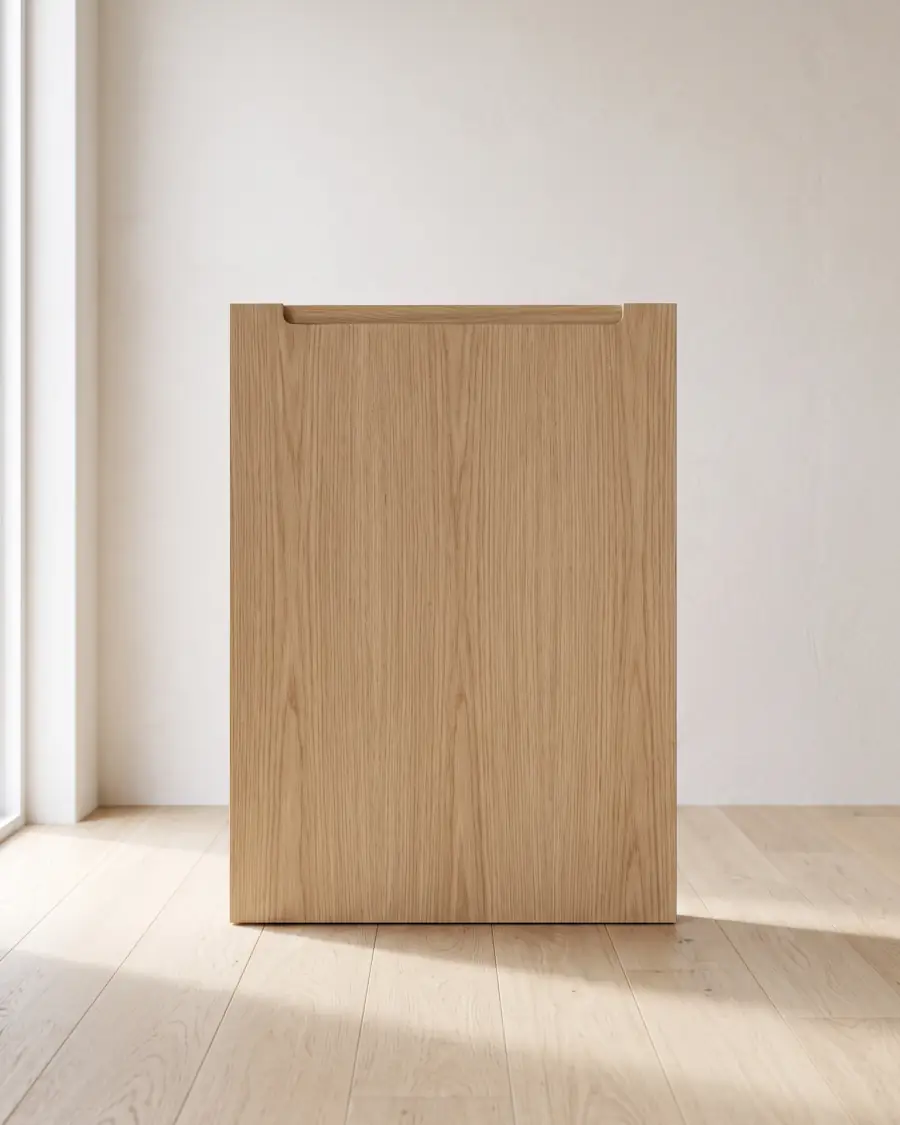
What a slab door actually is
A single flat panel, usually 18 to 19 mm thick, with an edge band or a solid lipping. No frame, no recess, no shadow line. The whole door is one plane, which is why it reads as modern even when the kitchen around it is not.
The simplicity is the point and also the problem. There is nowhere to hide a bad edge, a mismatched veneer or a hinge that has started to pull.
Where it works, and where it does not
Slab doors are at their best in small rooms. A flat front reflects light evenly and does not add visual weight, so a galley kitchen feels wider than it is. They also suit handleless kitchens, where the door is opened by a finger groove or a push latch, because there is no frame to interrupt the line.
They are less forgiving in a family kitchen with a lot of traffic. The edge is the vulnerable part: it takes the steam from a dishwasher, the knock from a mop and the occasional chair. A well-sealed edge survives; a cheap one swells.
If you want a bit more shadow and tradition, shaker is the obvious alternative. If you want texture without a frame, beadboard gives you grooves instead of a recess.
Living with it: edges, moisture and fingerprints
The two things that decide how a slab door ages are the edge and the finish.
An edge band is a thin strip glued to the core. It is fine in a dry room and less fine next to a sink or a dishwasher, where steam finds any weak point. A solid wood lipping costs more but behaves like furniture. If the door is going in a bathroom, ask specifically how the edge is sealed.
Fingerprints show more on a flat, dark, glossy slab than on a framed door, because there is no shadow to break up the surface. Matte finishes and mid-tone woods are much more forgiving. A micro-textured laminate is the most forgiving of all.
Check the light. Take a sample slab door and look along it at a low angle. A flat door shows every ripple in the core. If the surface looks wavy in raking light, it will look wavy in a sunlit kitchen.
What drives the price
Slab doors are usually the least expensive style to make, because there are fewer parts and fewer joints. That advantage disappears when you choose a real wood veneer with a book-matched grain, or a solid lipping instead of an edge band.
The other cost is the opening method. Handleless slab doors need a routed finger groove or a push-to-open mechanism, and both add machining and hardware. A plain slab door with a bar pull is the simplest and cheapest version of the style.
Mistakes to avoid
- Ordering a dark gloss slab for a kitchen with a window at one end. Every fingerprint and every ripple will be visible.
- Mixing veneer batches. Flat doors show a change in grain direction immediately.
- Forgetting the reveal. Slab doors are usually full-overlay, so the gaps between doors are the only visual rhythm in the run. Keep them even.
- Using a thin core on a tall pantry door. Flat and tall is the combination most likely to warp.
If your openings are not standard
A flat door is less tolerant of an out-of-square opening than a framed one, because there is no moulding to absorb the difference. If your boxes are old and slightly twisted, a made-to-measure door is often the cleanest fix — see custom cabinet doors made to your measurements.
Measure every opening before you choose a finish; the measuring guide walks through overlays and reveals.
More on door styles
All door style guides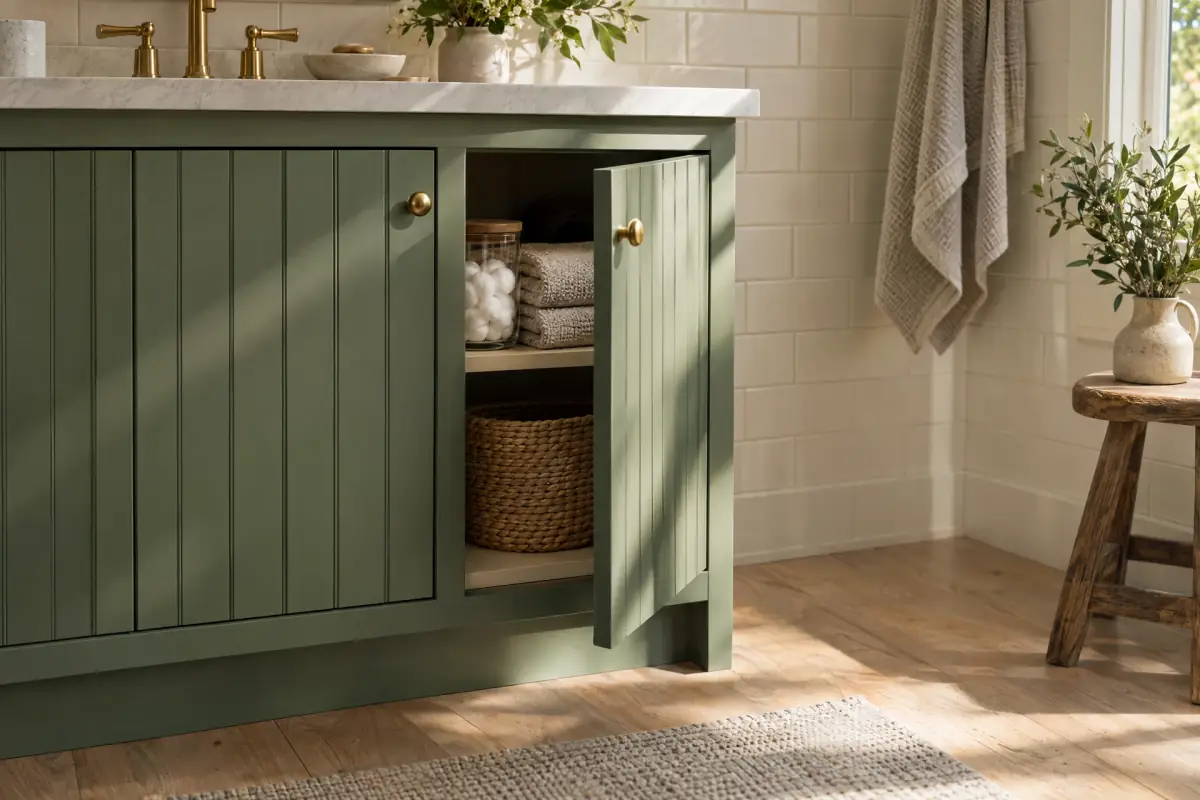
Beadboard cabinet doors: charm, minus the fuss
Where beadboard works, where it fights you, and how to specify it. Bead width, sealing, scale, and how to dodge the cottage-overload trap entirely.
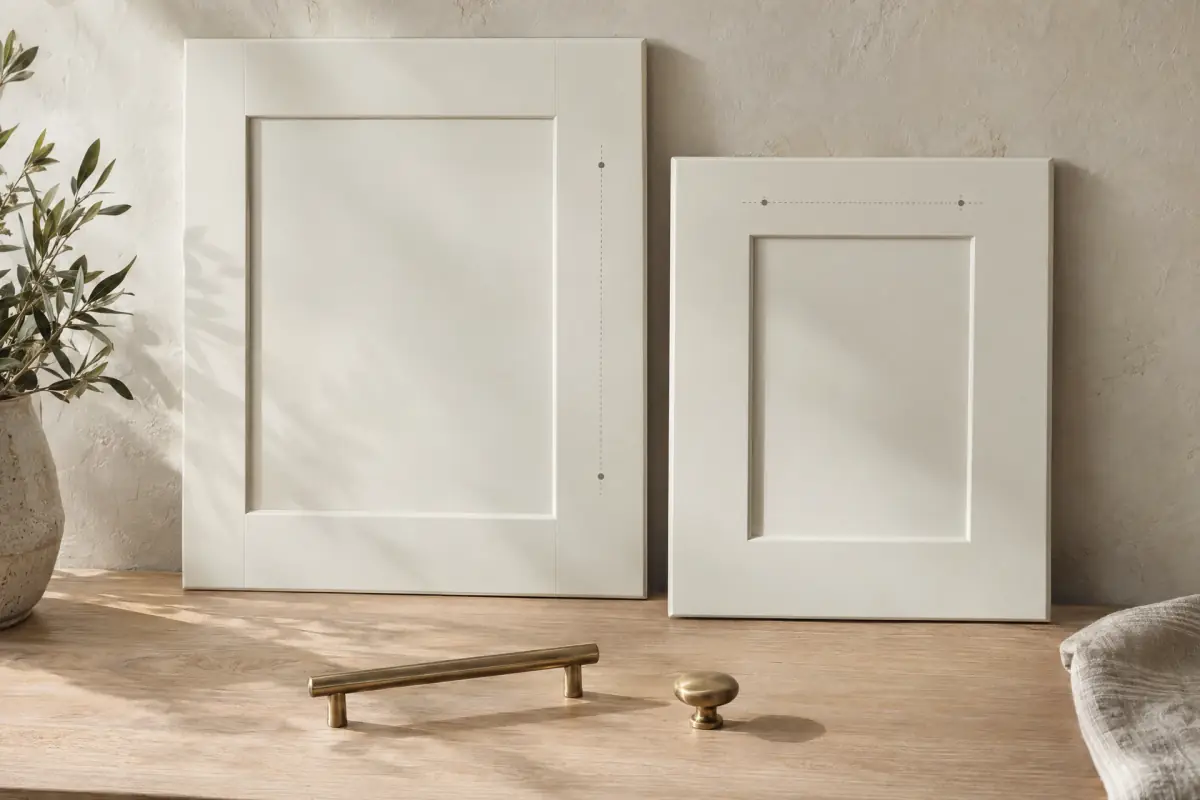
Hardware placement rules that look right
Knob or pull, and where exactly to put it. The placement rules that make a cabinet run look intentional, plus the mistakes that show up after drilling.