Door style · 05 of 05
Beadboard cabinet doors
Vertical planks with narrow beads between them. It brings texture without pattern and looks especially good in a bath or a utility room.
- Profile Vertical tongue-and-groove planks in a frame
- Best for Bathroom vanities · Utility and laundry rooms · Cottage and coastal schemes
- Watch out Grooves need sealing in wet rooms · Can look busy on tall runs
- Updated November 2026
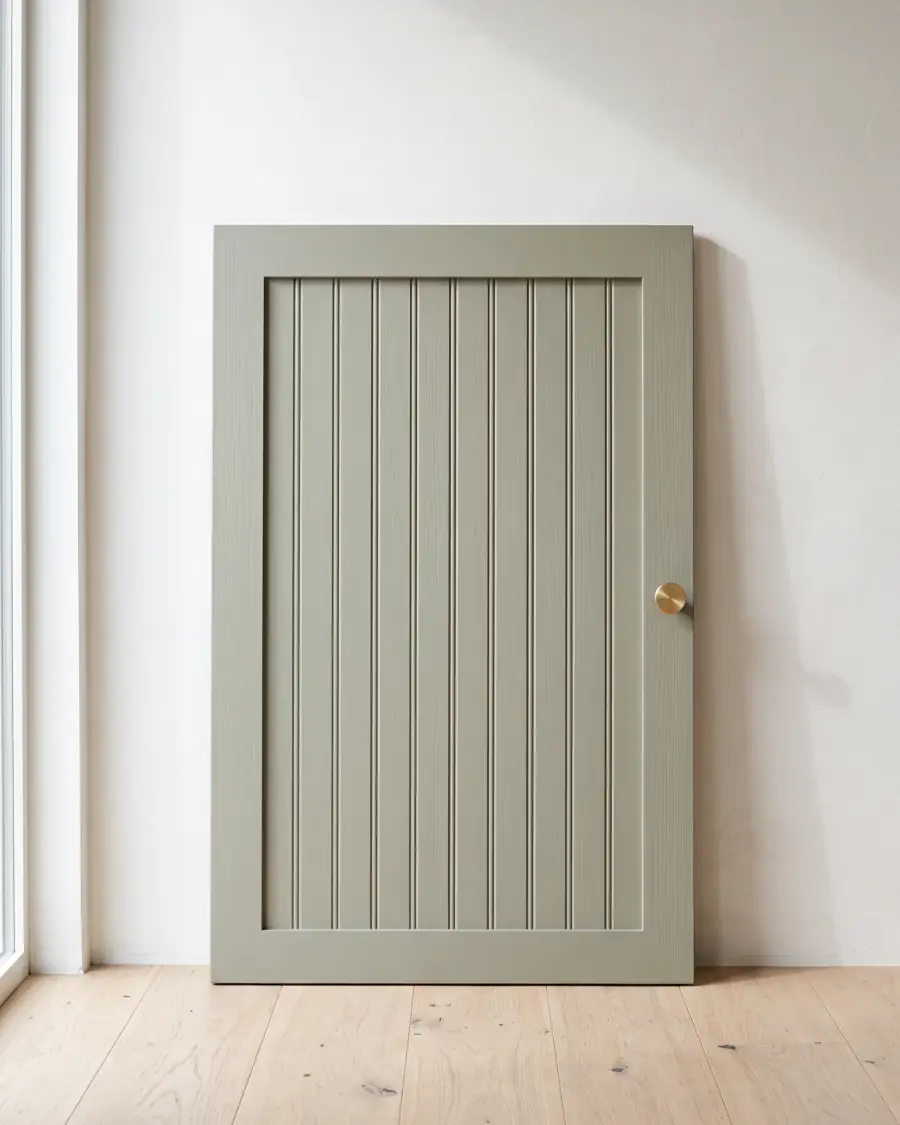
What a beadboard door actually is
Vertical planks, fitted together with a narrow bead running down each join. The bead is a small rounded ridge, and it is what separates beadboard from plain tongue-and-groove.
There are three ways to get the look. Real tongue-and-groove is the traditional version, with individual boards that move independently. A routed panel takes a solid sheet and cuts grooves into it, which is cheaper and more stable. An applied bead adds thin mouldings to a flat panel, which is the least expensive and the least convincing up close.
Where it works, and where it does not
Beadboard is at its best where a little texture is welcome and the room is small: a bathroom vanity, a laundry, a boot room, a cottage kitchen. The vertical lines add height, which helps a low ceiling.
It is a poor fit for a long, tall run of kitchen cabinets. Twenty doors of vertical grooves read as a fence, and the kitchen starts to feel like a beach house that got out of hand. Use it as an accent — a pantry, an island back, one bank of cabinets — rather than the whole room.
If you want texture with more restraint, shaker gives you a single shadow line instead of many. If you want a cleaner modern look, slab removes the lines entirely.
Living with it: moisture, crumbs and paint
Every bead is a small channel, and every channel collects something. In a dry room it is dust; in a bathroom it is dust plus soap residue. A soft brush and a wipe down the grooves once a week keeps it under control.
Moisture is the real issue. In a bathroom or beside a sink, the grooves need to be sealed properly — primer into the groove, then at least two topcoats. The end grain at the top and bottom of each door should be sealed too, because that is where water gets in.
Paint is the natural finish, and a soft sage, off-white or pale grey suits the profile. Stain works but the beads can look muddy. If you want the grain to show, a clear finish on oak beadboard is a lovely thing in a utility room.
The bead scale rule. Narrow beads on a narrow door look delicate. Wide beads on a narrow door look like a fence. Match the bead spacing to the door width, not to the room.
What drives the price
Beadboard sits in the middle. Real tongue-and-groove takes more machining and more assembly than a flat panel, but less than a raised panel with a moulded frame. A routed panel is cheaper again.
The finish matters more than usual, because there are more surfaces to seal. A factory finish that gets into the grooves is worth paying for in a wet room.
Mistakes to avoid
- Using beadboard on every cabinet in a large kitchen. It overwhelms the room.
- Skipping the sealer in a bathroom. The grooves will swell and the paint will crack along the bead.
- Mixing beadboard doors with a very modern slab drawer front. Pick one language per run.
- Choosing a glossy finish. It highlights every ripple in the planks.
If your openings are not standard
Beadboard is often used to match existing panelling, and matching a bead profile is a job for a maker rather than a catalogue. If you need a door that lines up with the wall panelling or an odd vanity opening, have it made to the measurement — see custom cabinet doors made to your measurements.
Start with the measuring guide so the new doors line up with the old ones, and check the materials guide before choosing a core for a damp room.
More on door styles
All door style guides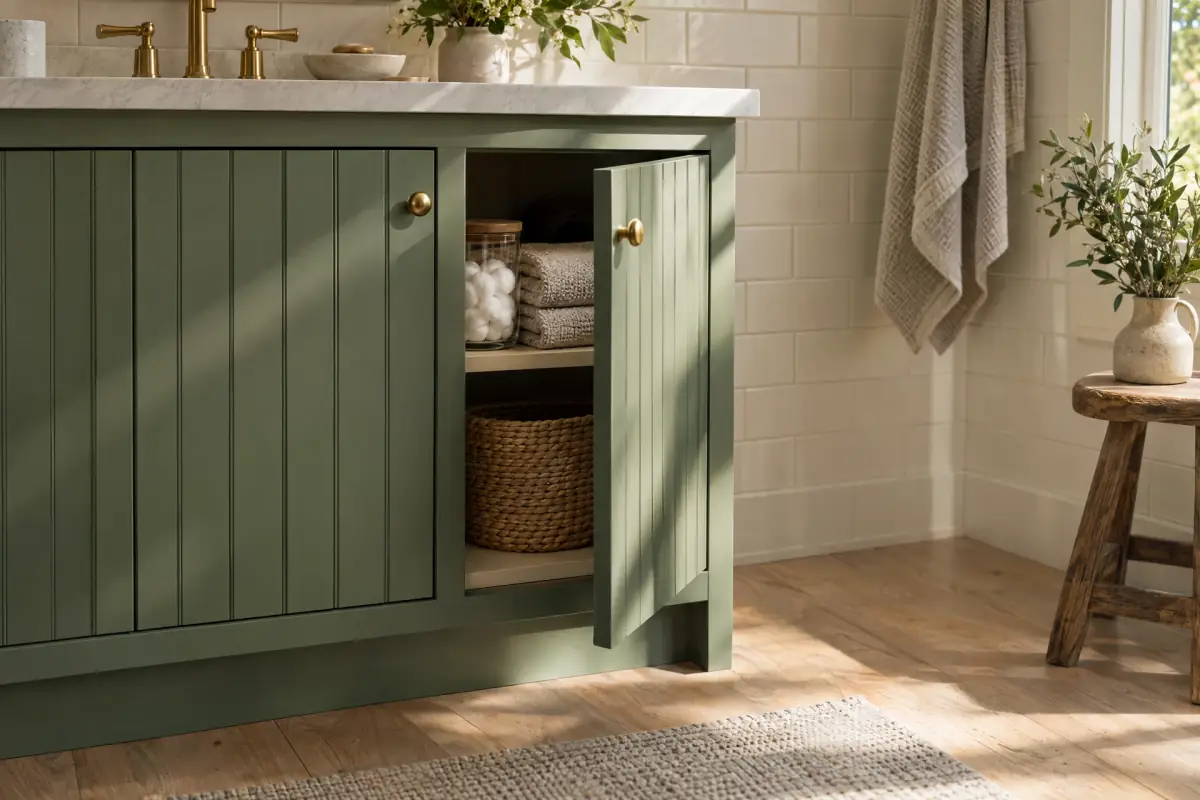
Beadboard cabinet doors: charm, minus the fuss
Where beadboard works, where it fights you, and how to specify it. Bead width, sealing, scale, and how to dodge the cottage-overload trap entirely.
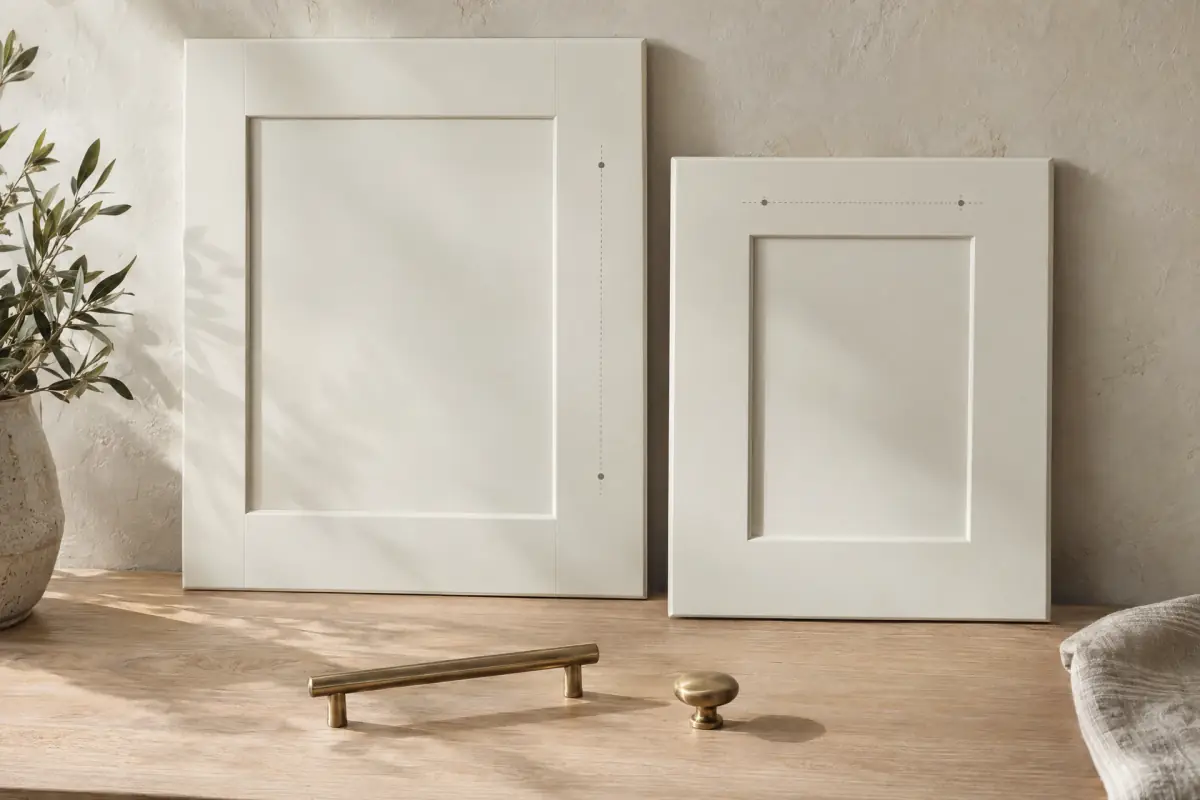
Hardware placement rules that look right
Knob or pull, and where exactly to put it. The placement rules that make a cabinet run look intentional, plus the mistakes that show up after drilling.