Door style · 03 of 05
Raised panel cabinet doors
A centre panel that steps forward inside a moulded frame. It reads as formal, furniture-grade and a little bit grown-up.
- Profile Five-piece door, raised centre panel, moulded frame
- Best for Period homes · Stained wood finishes · Rooms with high ceilings
- Watch out Harder to clean · Busy in small kitchens · Costs more per door
- Updated November 2026
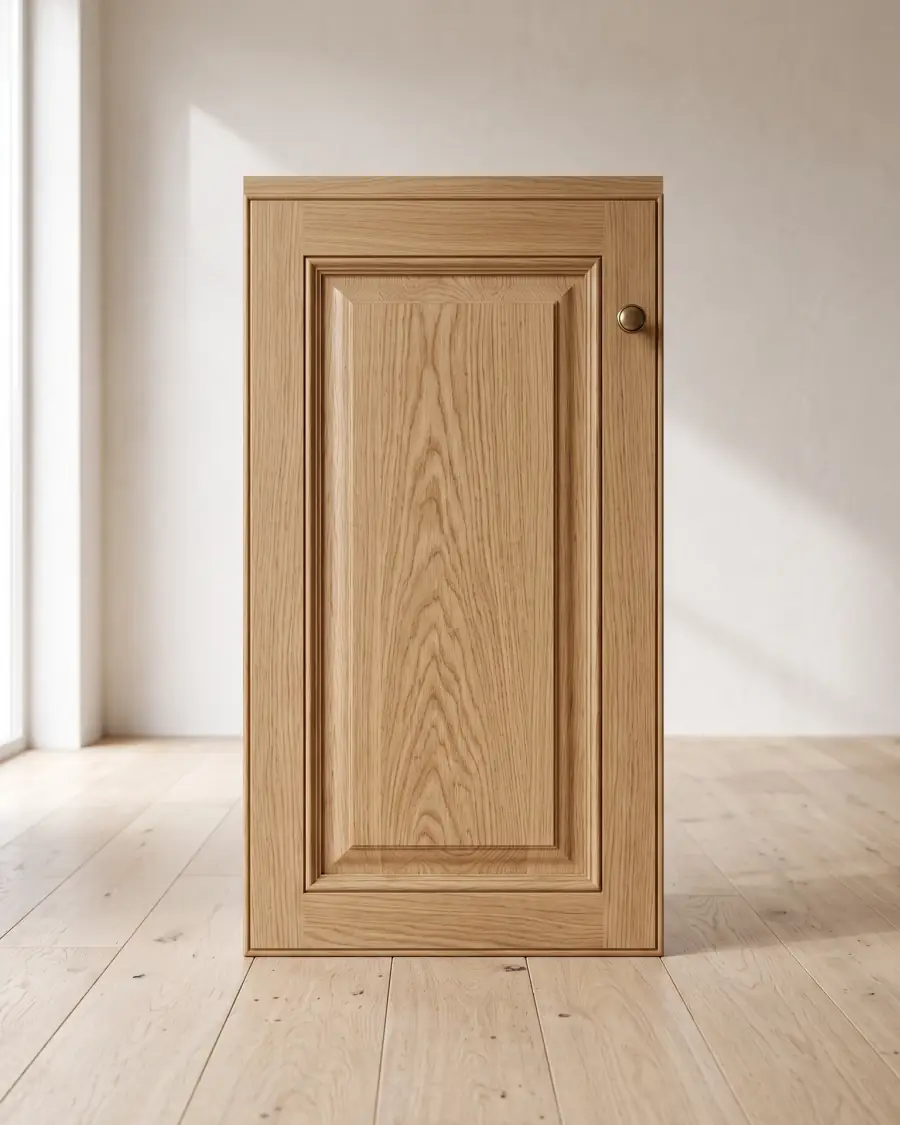
What a raised panel door actually is
A five-piece door where the centre panel is shaped to stand proud of the frame, and the frame itself is moulded rather than flat. The profile catches light along its curves, which is why a raised panel door looks substantial from across a room.
There are two common constructions. A solid raised panel is milled from thicker stock and floats in the frame. A applied moulding achieves a similar look with less material. The first is furniture; the second is a picture of furniture, and the price reflects it.
Where it works, and where it does not
This is the door for a room with a bit of height and a bit of history. A period property, a dining room that is really a dining room, a kitchen with a high ceiling and a range hood that deserves company. Stained oak or walnut suits it better than paint, because the moulding needs grain to read.
It fights small rooms. The profile adds visual weight and shadows, and in a narrow galley it can make the cabinets feel closer than they are. It also fights very contemporary architecture, where the moulding looks like a costume.
If you want tradition with less upkeep, shaker gives you the frame without the moulding. If you want period detail only in the bath, beadboard is a lighter way to get it.
Living with it: dust, grease and repainting
The moulding is a shelf. Grease and dust settle on the curves, and the corners are fiddly. A soft brush and a microfiber cloth every couple of weeks keeps on top of it; a monthly deep clean is more realistic in a working kitchen.
Repainting a moulded door is a job for someone patient. Brush marks show on the curves, and sanding between coats is harder than on a flat panel. A factory finish is worth the extra here, because it is applied evenly and cured hard.
Stained wood is more forgiving day to day but harder to repair. A scratch through a stain is visible, and blending a repair is a craft. Painted raised panel doors can be filled and touched in.
The proportion rule. A raised panel door needs a wide frame to look right. If the frame is narrow, the moulding crowds the panel and the door looks busy rather than generous.
What drives the price
Raised panel is usually the most expensive of the traditional styles, because there is more machining, more material and more finishing time per door. The profile, the panel construction and the finish all move the number.
It is also the style most likely to be specified with a matching range of mouldings, light rails and crown. Those extras are where a traditional kitchen budget quietly grows.
Mistakes to avoid
- Putting raised panel doors on every cabinet, including a small utility room. It is a lot of personality for a small space.
- Choosing a very dark stain in a room with one small window. The moulding disappears and the kitchen feels like a cave.
- Mixing a raised panel door with a flat drawer front. The transition looks accidental.
- Forgetting that the profile needs clearance. Doors with deep mouldings can foul an adjacent pull.
If your openings are not standard
Raised panel doors are usually made to order anyway, so an odd size is less of a problem than with stock cabinetry. The bigger question is whether the maker will match an existing profile in an older kitchen. If you need a single door to blend into a 1980s run, a specialist who will match the moulding is the right call — see custom cabinet doors made to your measurements.
Whatever you choose, get the opening sizes right first with the measuring guide, and check the materials guide before you decide between a painted and a stained finish.
More on door styles
All door style guides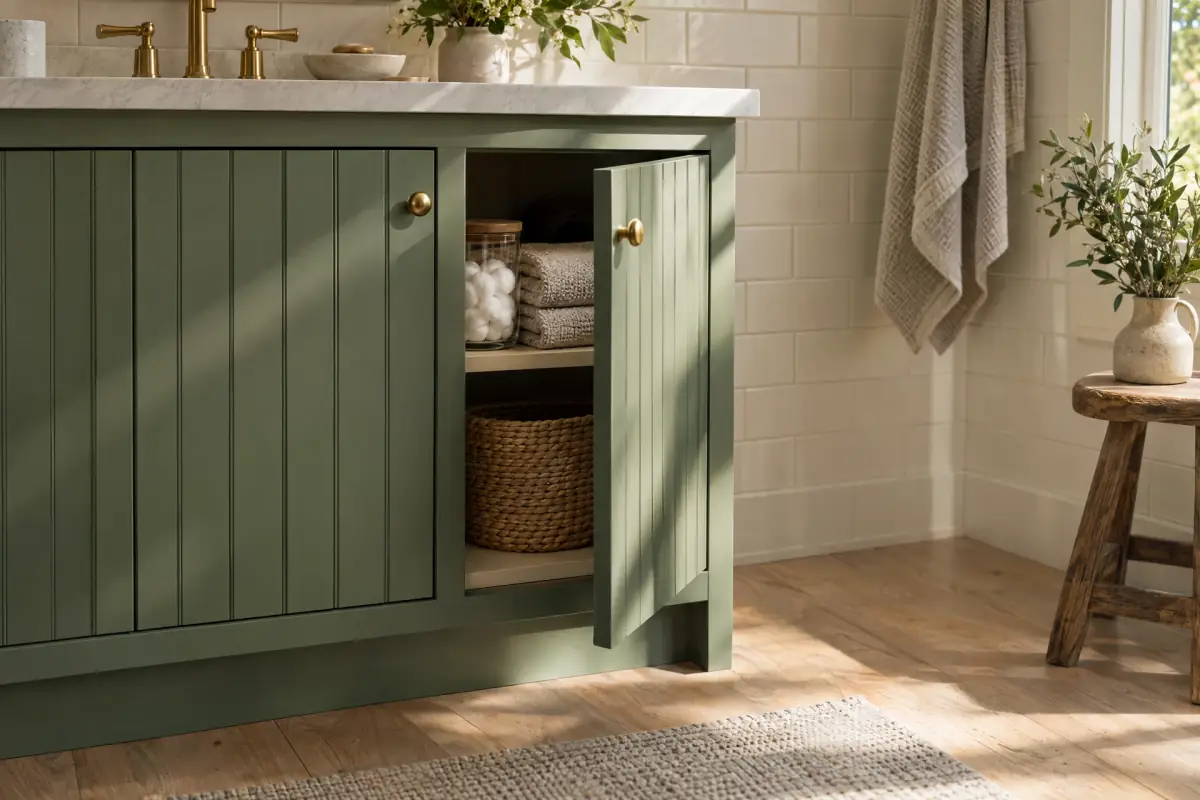
Beadboard cabinet doors: charm, minus the fuss
Where beadboard works, where it fights you, and how to specify it. Bead width, sealing, scale, and how to dodge the cottage-overload trap entirely.
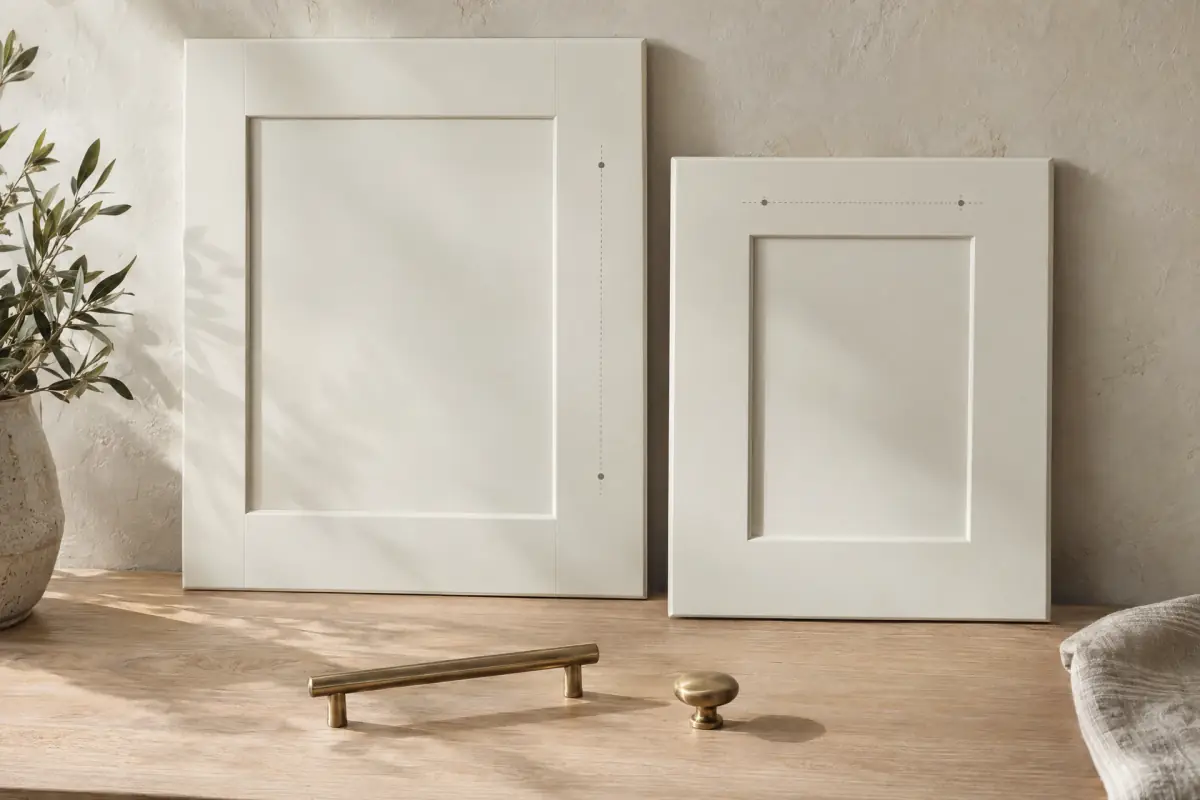
Hardware placement rules that look right
Knob or pull, and where exactly to put it. The placement rules that make a cabinet run look intentional, plus the mistakes that show up after drilling.