Door style · 04 of 05
Inset cabinet doors
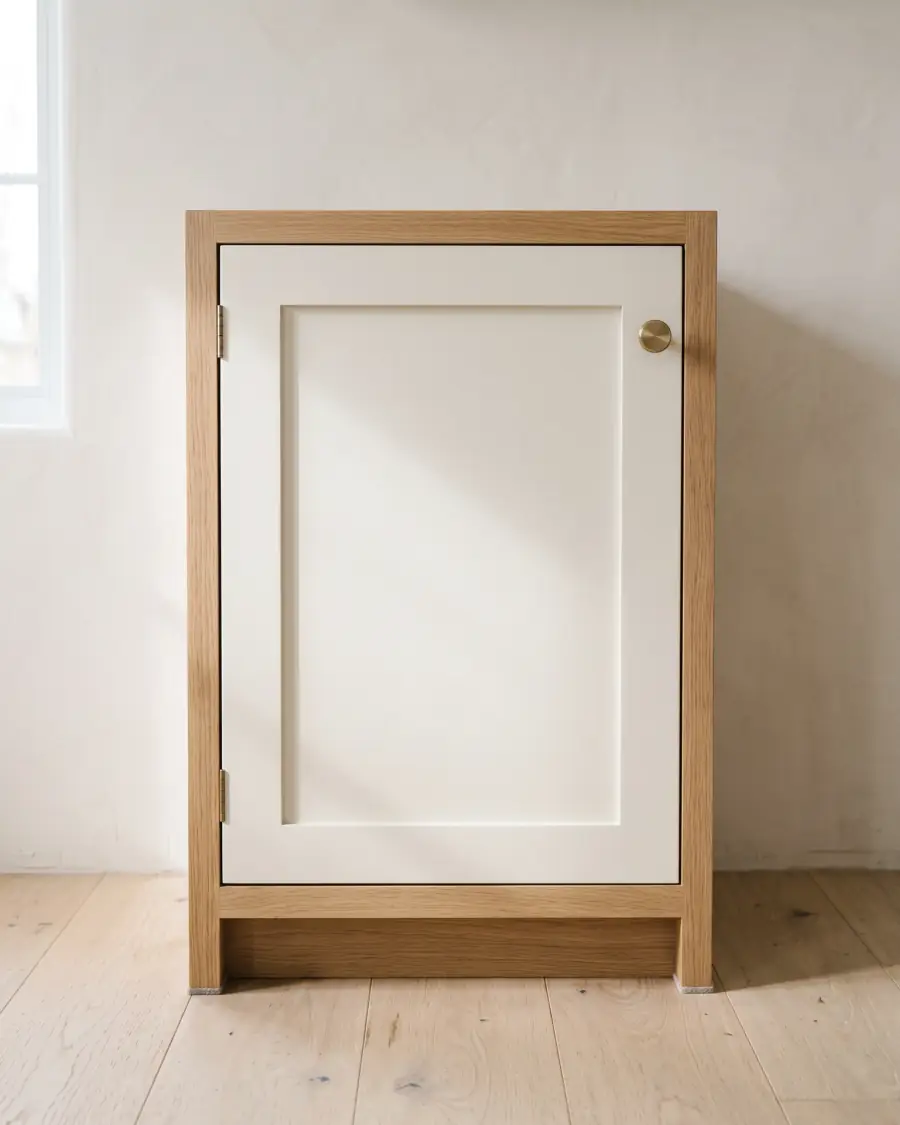
The door sits flush inside the face frame instead of on top of it. Every reveal is visible, so the boxes have to be square and the hinges have to be good.
- Profile Flush door inside a face frame, 2–3 mm reveal
- Best for Craft-forward kitchens · Period joinery · Anyone who likes quiet precision
- Watch out Needs accurate boxes · Costs the most to get right · Reveals show movement
- Updated November 2026
What an inset door actually is
Most cabinet doors sit on top of the face frame. An inset door sits inside it, so the door face is flush with the frame and a thin, even gap runs all the way around.
That gap is the whole design. It is usually 2 to 3 mm, and it has to be consistent on every door in the run. When it is right, an inset kitchen looks built rather than assembled. When it is wrong, every millimetre is visible from the doorway.
Where it works, and where it does not
Inset suits rooms where the joinery is part of the architecture: period properties, panelled studies, kitchens with a lot of custom cabinetry. It also suits anyone who likes the quiet click of a door sitting exactly where it should.
It does not suit a rushed installation or a cheap box. The frame has to be square, the hinges have to be adjustable in three directions, and the doors have to be made to the actual opening rather than a nominal size.
If you love the look but the budget is tighter, shaker gives you a similar calm without the precision tax. If you want the flush look with more texture, slab is the modern version.
Living with it: humidity, swelling and adjustment
Wood moves. An inset door has a fixed gap, so when the humidity swings, the gap changes. In a well-controlled house this is a few tenths of a millimetre and nobody notices. In a kitchen with a badly vented dryer, it can be enough to rub.
The practical answer is a stable core — MDF or a quality plywood — and hinges with enough adjustment to correct seasonal movement. Ask the maker what allowance they build in, and ask what happens in July.
Cleaning is easy because there is no frame to trap dust. The reveal itself collects a fine line of crumbs, which a vacuum brush lifts in seconds.
The reveal test. Stand at the end of a run and look along the gaps. They should read as one continuous line. If the gaps wander, the boxes are out of square and no amount of hinge adjustment will hide it.
What drives the price
Inset is usually the most expensive way to hang a door. The boxes need face frames, the doors need to be made to the opening, and the installation takes longer because every door has to be adjusted.
The hinge is the other cost. An inset door needs a hinge designed for flush mounting, and the good ones are not cheap. This is not the place to save.
Mistakes to avoid
- Specifying inset on cabinets that are already made and installed. Retrofitting inset is rarely worth it.
- Asking for a hairline gap. It looks wonderful in a showroom and rubs in a real kitchen.
- Using a heavy solid-wood door on a wide opening without checking the hinge rating.
- Forgetting the drawer fronts. Inset drawers need the same flush treatment or the run looks half-finished.
If your openings are not standard
Inset is made to measure by definition, so the maker needs accurate numbers, not nominal ones. If you are matching an existing face frame, the reveal and the frame profile have to be measured, not guessed. A specialist who builds to your measurements is the safe route — see custom cabinet doors made to your measurements.
The measuring guide covers how to record an opening properly, and the materials guide explains which cores stay stable enough for a flush fit.
More on door styles
All door style guides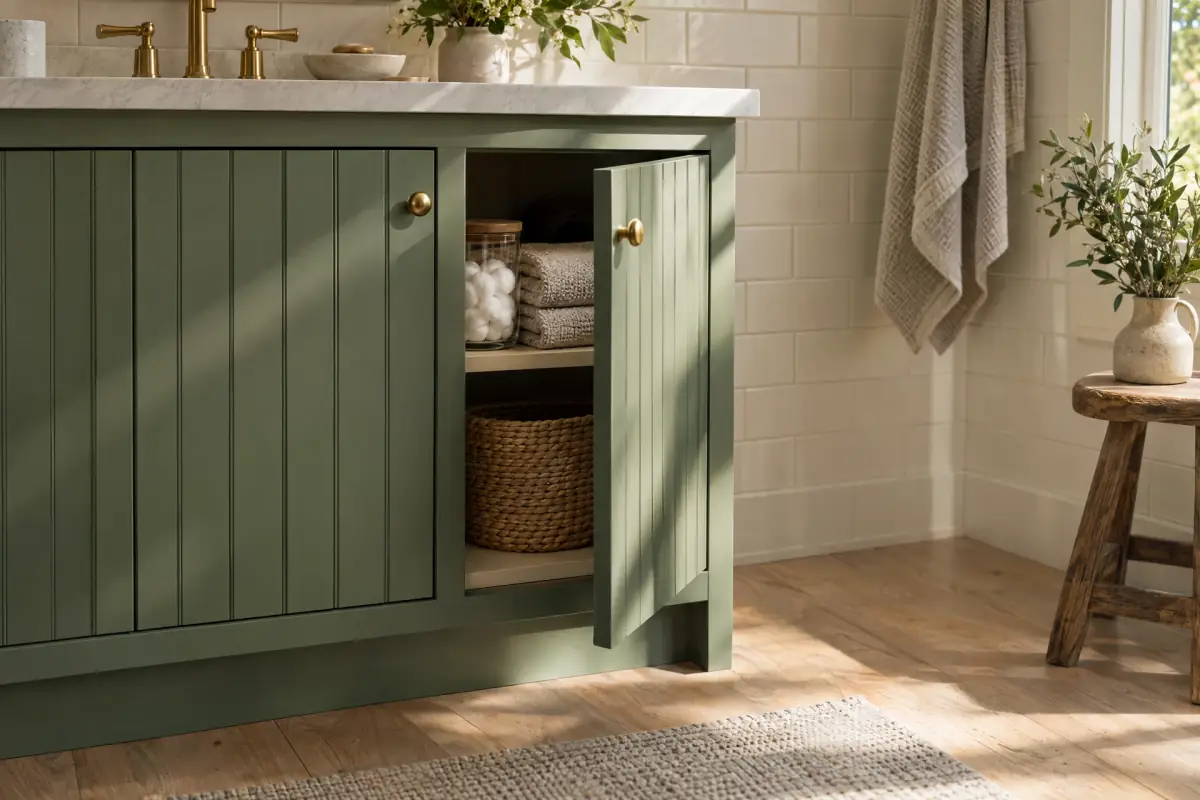
Beadboard cabinet doors: charm, minus the fuss
Where beadboard works, where it fights you, and how to specify it. Bead width, sealing, scale, and how to dodge the cottage-overload trap entirely.
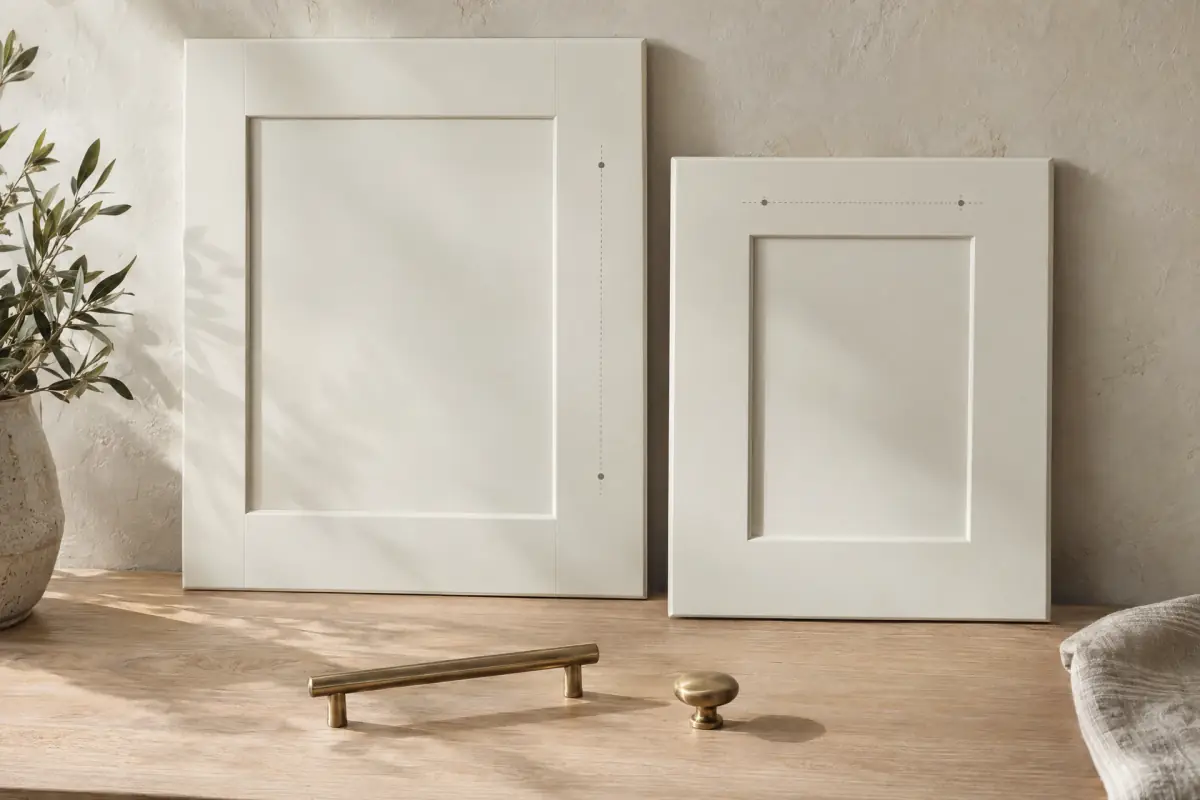
Hardware placement rules that look right
Knob or pull, and where exactly to put it. The placement rules that make a cabinet run look intentional, plus the mistakes that show up after drilling.