Beadboard cabinet doors: charm, minus the fuss
Where beadboard works, where it fights you, and how to specify it. Bead width, sealing, scale, and how to dodge the cottage-overload trap entirely.

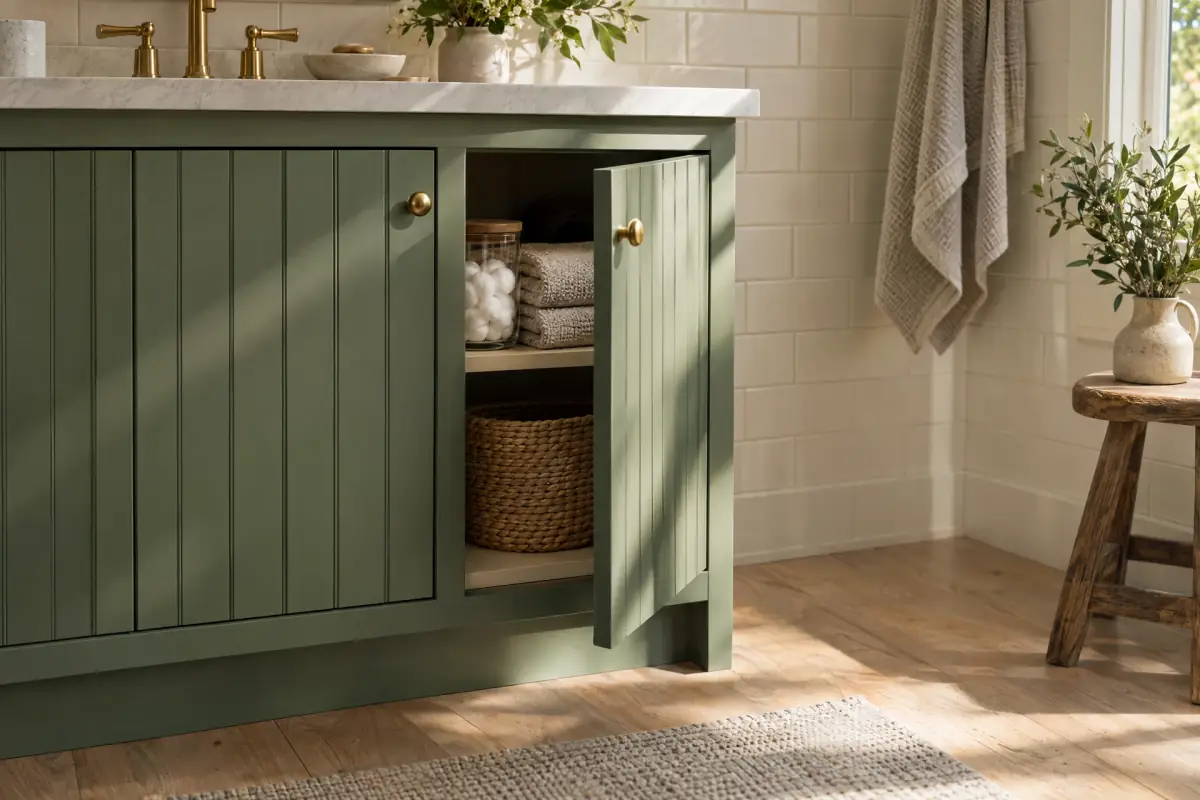
Beadboard is tongue-and-groove paneling with a rounded bead where the planks meet. On cabinet doors it adds texture without a printed pattern, and it works hardest in bathrooms, laundry rooms, and utility spaces. Specify the bead, the plank width, and the finish before you fall for a photo.
What beadboard actually is
Each plank has a groove along one edge and a tongue along the other. When two planks join, the profile shows as a bead: a rounded ridge with a fine shadow line on each side. That shadow is the whole point. It gives the surface depth without color or pattern.
A V-groove does something similar with a sharp valley instead of a rounded bead. Suppliers sometimes call both beadboard. They are not the same look, and the difference is obvious once the light hits them.
On a cabinet door, the planks sit inside a frame, and the grain usually runs vertically. Vertical planks draw the eye up, which flatters a tall door and a small room. Horizontal planks make a door look wider and a room look lower, which is occasionally exactly right and usually not.
Beadboard started life as a practical wall and ceiling lining: easy to replace a damaged board, forgiving of movement, cheap to produce. That practicality is why it still looks at home in a utility room.
Real, routed, or applied bead
There are three ways to get the look, and they are not interchangeable:
- Real planks. Separate boards joined tongue and groove inside a frame. You get real joints, real shadow lines, and real seasonal movement. The most work, and the most convincing result.
- Routed panel. One panel with grooves cut into the face. The beads are decoration rather than joints, so the panel is more stable and less expensive. Under strong side light it can look flat, because there is no actual gap between boards.
- Applied bead. Thin half-round strips glued or pinned onto a flat panel. Quick, and the weakest of the three. The strips can lift, telegraph through paint, and read as trim rather than joinery.
If you are painting the door, the difference between real and routed is mostly the depth of the shadow. If you are staining it, the difference is much harder to hide.
Where beadboard earns its place
The beadboard door style does its best work at small scale, in rooms where a little texture helps and a lot would crowd.
Bathroom vanities. A vanity is a small run of doors, often in a room with plain walls and hard surfaces. Beadboard softens it, and a sealed door handles the humidity. It also hides water marks better than a flat painted panel, because your eye reads the beads rather than the marks.
Laundry and utility rooms. These rooms are allowed to be charming. Beadboard suits the scale, and the doors are usually closed over the mess.
Mudrooms and entryways. A beadboard back panel behind hooks, with plain doors above, gives the cottage note without committing every door.
A single island or a single vanity. One textured element in a quiet room reads as a decision. A whole kitchen of it reads as a theme.
Where it fights you
Tall runs. A wall of floor-to-ceiling pantry doors in beadboard is a lot of vertical lines. The room starts to feel like a shed, and every bead is another edge to finish.
Very small kitchens. Texture can close a small room in. Beadboard painted the same color as the walls is calmer, because the beads read as shadow rather than pattern.
Modern slab kitchens. A slab door is quiet and flat. Beadboard next to it looks like a costume change, not a contrast.
Open-plan rooms. Beadboard signals cottage. If the rest of the house is minimal and modern, the kitchen can look staged.
Behind a range. Fine beads and cooking grease are not friends. The grooves nearest the range collect everything the hood misses.
Cheap routed panels. A shallow groove in a thin panel looks like a scratch at a distance. Beadboard depends on shadow, and shallow grooves cast almost none.
Moisture, sealing, and cleaning the grooves
In a bathroom, seal every door on all six sides, including the bottom edge and any cut edge. Paint alone is not a sealer at end grain, and a beadboard door that takes on water at the bottom will swell before it fails anywhere else. Use a finish made for humid rooms, and fix the leak that is causing the moisture rather than choosing a tougher paint.
In a kitchen, the enemy is grease rather than water. A soft brush, a vacuum brush attachment, or a microfiber cloth run along the bead once a month keeps the shadow lines crisp. A mild degreaser is fine. Soaking is not. Neither is wax, which turns sticky in a warm kitchen and collects dust in every groove.
Material matters here. MDF is stable and paints beautifully, but it swells if water reaches an unsealed edge. Solid wood moves with the seasons, which is fine in a hallway and less fine in a shower room. The materials guide explains where each one belongs.
Scale: bead width, plank width, and door height
Beadboard lives or dies on scale, and scale is the part most people leave to the supplier.
Bead width. A narrow bead looks delicate and furniture-like. A wide bead looks chunkier and more obviously cottage. Neither is better; they belong in different rooms.
Plank width. Narrow planks mean more beads, more shadow, and a busier face. Wide planks are calmer and read more modern farmhouse than cottage.
Door height. A tall door with uninterrupted planks can look stretched, and long boards move more. A horizontal mid-rail breaks the run and gives the eye a rest. On a full-height pantry, line that rail up with the counter height next door and the whole run looks considered.
Door width. A narrow door with wide planks may show a single bead, which looks like a mistake. A wide door with narrow planks can look like a fence. Ask to see the actual plank count on your actual door size before you approve it.
Frame width. A wide frame with a narrow bead reads traditional. A slim frame with a wide bead reads contemporary. Mixing the two produces something that belongs to neither.
Paint or stain, and pairing it with the rest of the house
Paint is the natural home for beadboard. It hides the species, shows the profile, and lets a single color carry the texture. A soft green, a warm white, or a deep blue all work; the beads do the decorating.
Stain is harder. It shows the grain, which is good, and it turns every bead into a dark line, which can be heavy in a small bathroom. A clear finish on oak with a wide bead can look like furniture. The same finish on a narrow bead can look like a slatted crate.
Pairing is where beadboard either settles in or takes over:
- Beadboard on the island, shaker on the perimeter. One texture, one quiet background.
- Beadboard in the utility room only, slab everywhere else. The cottage note stays where the mess is.
- Beadboard on a vanity, plain painted walls, no other pattern in the room.
The risk is cottage overload: beadboard doors, a beadboard backsplash, a beadboard ceiling, a gingham blind, and a ship’s ladder. Any two of those are charming. All five is a themed pub, and you have to live in it.
| Room | Verdict | Why |
| — | — | — |
| Bathroom vanity | Yes | Small run, texture suits, handles humidity once sealed |
| Laundry or utility room | Yes | The cottage note fits the scale and the mess stays hidden |
| Kitchen perimeter | Yes, with care | Works when the rest of the room is quiet and the run is short |
| Kitchen island | Yes, one panel | Texture without committing every door in the room |
| Full-height pantry | Careful | Long planks, busy verticals, more movement to allow for |
| Modern slab kitchen | No | Fights the flat, quiet lines that made the room work |
| Open-plan living wall | Careful | Reads as staged unless the rest of the room agrees |
What I would do
I would use beadboard where the room is small and the door count is low: a bathroom vanity, a laundry run, a mudroom. I would choose real tongue-and-groove over a routed panel if the budget allows, and I would ask to see a sample door at the actual width before signing anything. Then I would seal all six sides, keep the rest of the room plain, and let one textured run do the talking.
Keep reading
All guides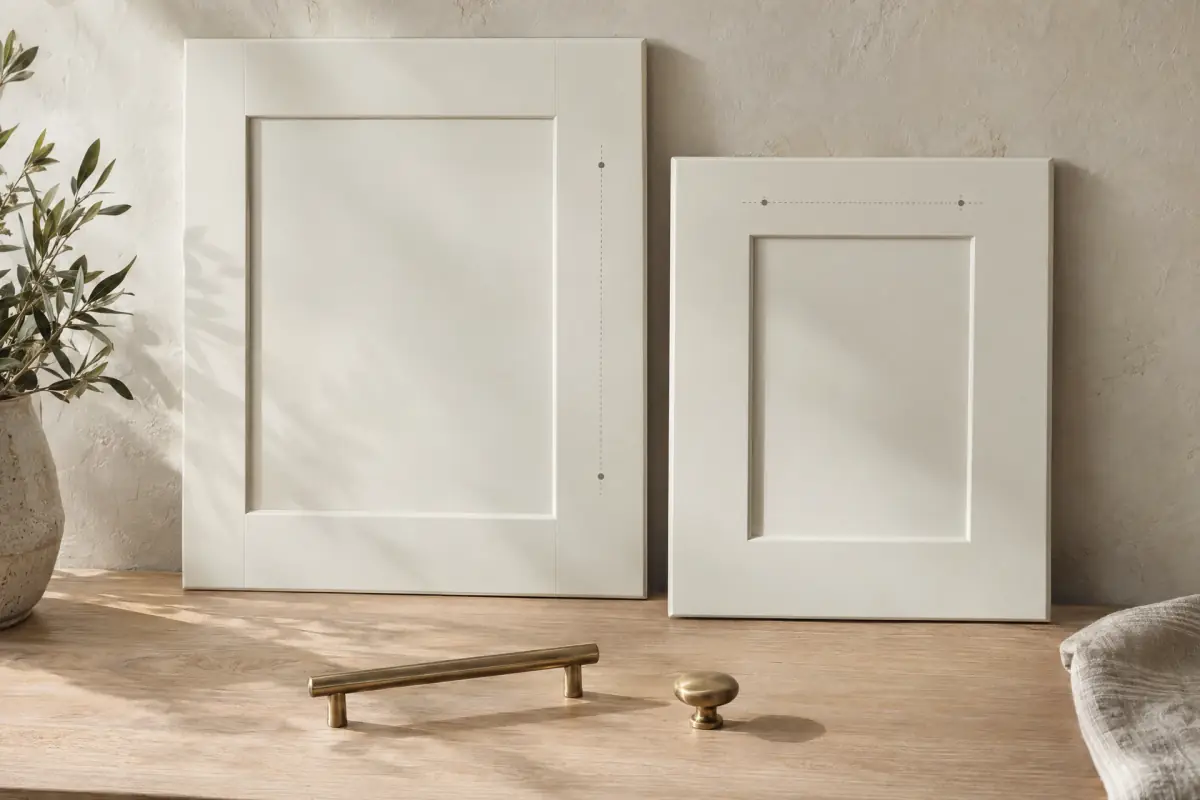
Hardware placement rules that look right
Knob or pull, and where exactly to put it. The placement rules that make a cabinet run look intentional, plus the mistakes that show up after drilling.
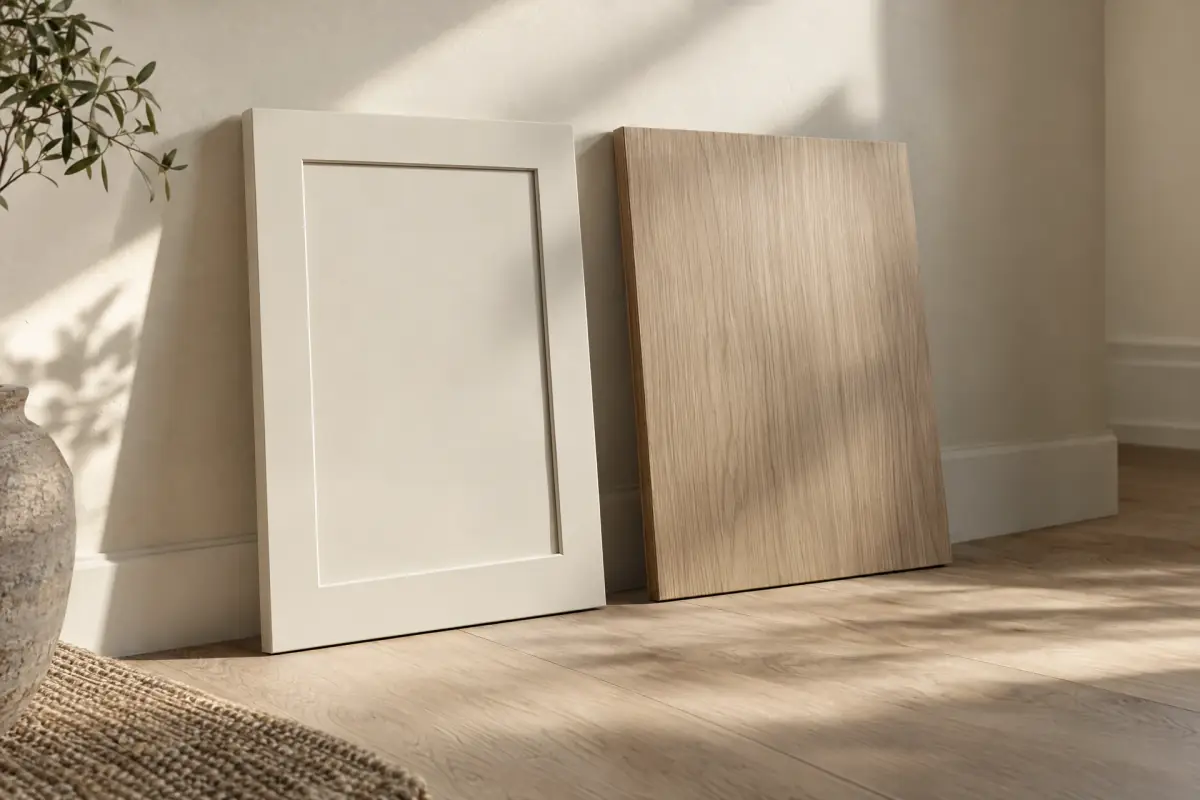
Shaker vs slab cabinet doors: which ages better
A ten-year look at shaker and slab cabinet doors: how each handles dents, grease, steam and repainting, and which rooms suit each one the best.