Door style · 01 of 05
Shaker cabinet doors
A flat centre panel inside a simple four-piece frame. Quiet enough for a farmhouse, sharp enough for a city flat, and the easiest style to live with for a decade.
- Profile Five-piece door, recessed panel, 2¼ inch frame
- Best for Resale-safe kitchens · Painted finishes · Homes that will be repainted once
- Watch out Frame joints collect dust · Cheap versions look flat and papery
- Updated November 2026
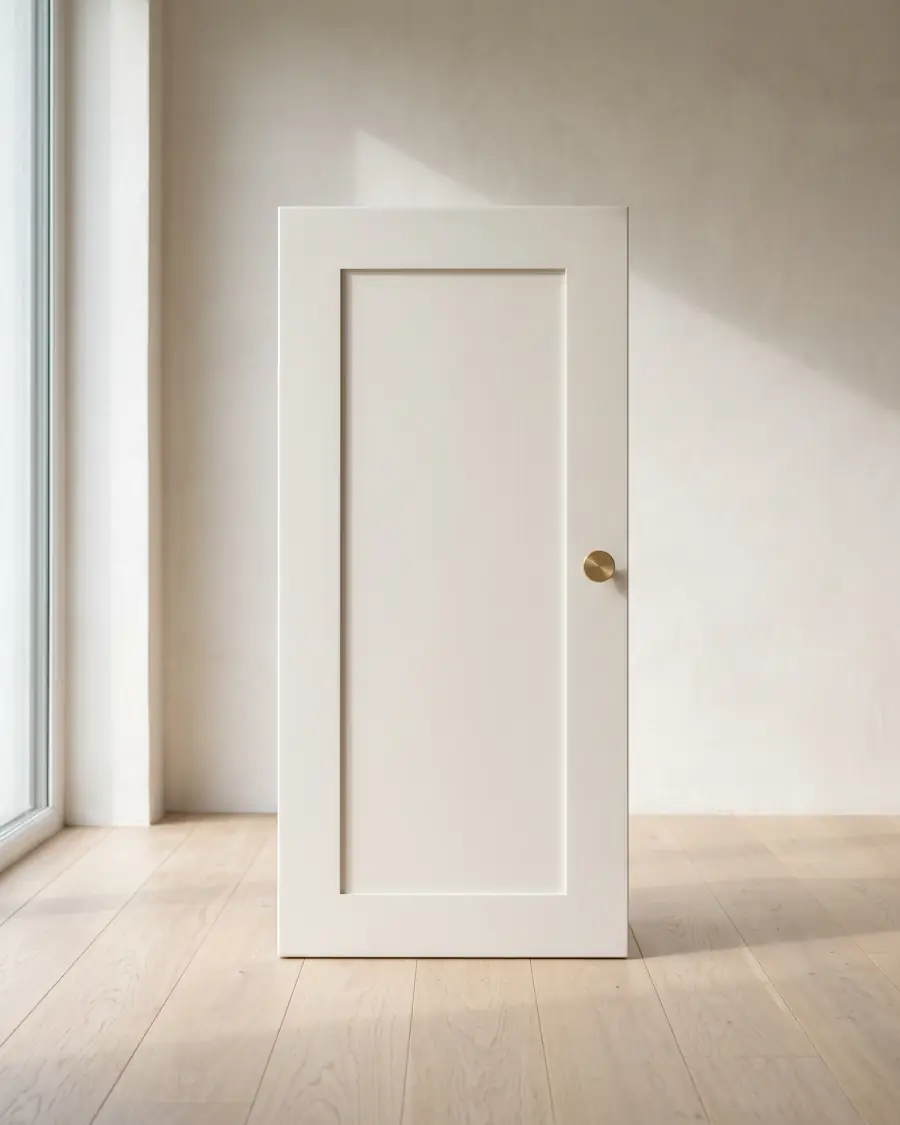
What a shaker door actually is
Five pieces of wood or board, joined into a frame with a flat panel floating inside it. That is the whole idea, and it has survived for three centuries because it does not ask much of a room.
The frame is usually 2 to 2½ inches wide. The panel sits recessed by a few millimetres, which is what gives the door its shadow line and its slightly furniture-like feel. The recess also means a shaker door has somewhere for dust to land, which matters more than most showrooms admit.
Where it works, and where it does not
Shaker is the most forgiving style in the catalogue. It suits a 1920s semi, a new-build flat and a converted barn without looking borrowed. In a small kitchen it adds a little shadow and depth without adding visual noise, and in a large one it stops a wall of cabinets from looking like a server rack.
It struggles in two places. First, very modern rooms where the architecture is all sharp planes and no moulding — a slab door usually sits more comfortably there. Second, very small bathrooms, where the frame plus the recess can make a narrow vanity look busy.
If you want the cabinet run to disappear rather than perform, go slab. If you want more traditional weight, look at raised panel.
Living with it: cleaning, dents and repainting
The frame is the part that takes the knocks. A painted shaker door dents rather than chips, and a dent in a painted finish can usually be filled and touched in without repainting the whole door. That is the quiet advantage of paint over a foil or veneer: it is repairable.
Cleaning is a five-minute job with a soft cloth and a little dish soap, but you have to get into the recess. A soft brush helps. Avoid anything abrasive on the frame edges, because that is where the paint is thinnest.
If the kitchen is heading for a repaint in five years, shaker is the easiest style to repaint well. The flat panel and simple frame take a brush and a small roller without leaving lap marks, which is not true of a moulded raised panel.
What drives the price
Two shaker doors can look identical in a photo and be very different objects. The variables are the core (MDF, plywood or solid wood), the way the frame is joined, the width of the frame, and the finish. A wider frame uses more material and looks more traditional; a narrower frame looks more contemporary and usually costs a little less.
The finish is the other half of the story. A factory-applied paint or foil is consistent and hard-wearing; a site-painted door can be beautiful but depends entirely on the prep. Our materials guide explains what sits under the paint.
The 10-second test. Open and close the sample door. A good shaker door feels solid and does not ring. If it sounds hollow and light, the core is thin — and it will show at the hinges within a few years.
Mistakes to avoid
- Choosing the frame width last. It changes the whole proportion of the door, and it is hard to visualise from a swatch.
- Putting a shaker door on a wide drawer bank without checking the horizontal proportion. A 36-inch drawer front with a heavy frame can look like a picture frame.
- Assuming all shaker doors are the same. They are not, and the difference is mostly in the core and the joint.
- Forgetting the hardware. A shaker door with a cheap round knob looks like a rental; the same door with a slim bar pull looks intentional.
If your openings are not standard
Old houses rarely have square openings, and a shaker door is unforgiving about a bad reveal. If your boxes are out by more than a few millimetres, or you need a one-off size to close a run, it is worth talking to a maker who will build to your measurements rather than trimming a stock door on site — see custom cabinet doors made to your measurements.
Before you order anything, work through the measuring guide and write every opening down. It is the cheapest hour you will spend on the whole project.
More on door styles
All door style guides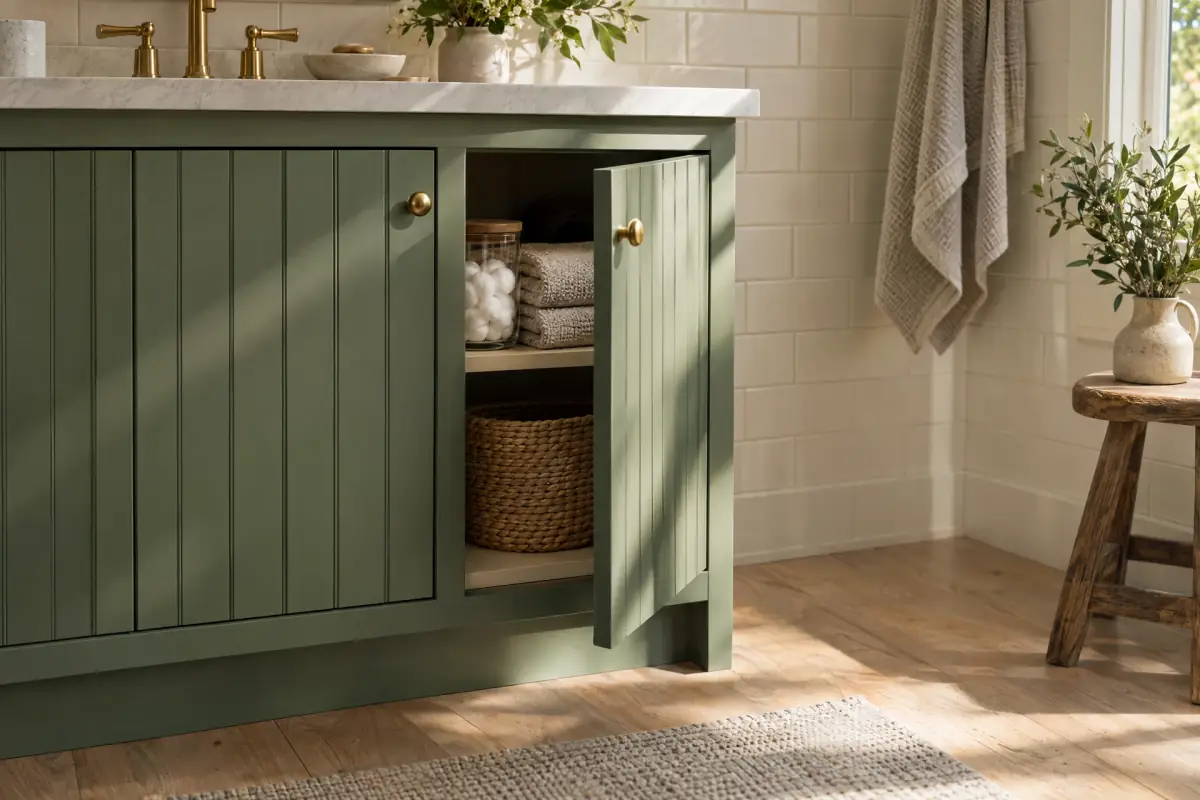
Beadboard cabinet doors: charm, minus the fuss
Where beadboard works, where it fights you, and how to specify it. Bead width, sealing, scale, and how to dodge the cottage-overload trap entirely.
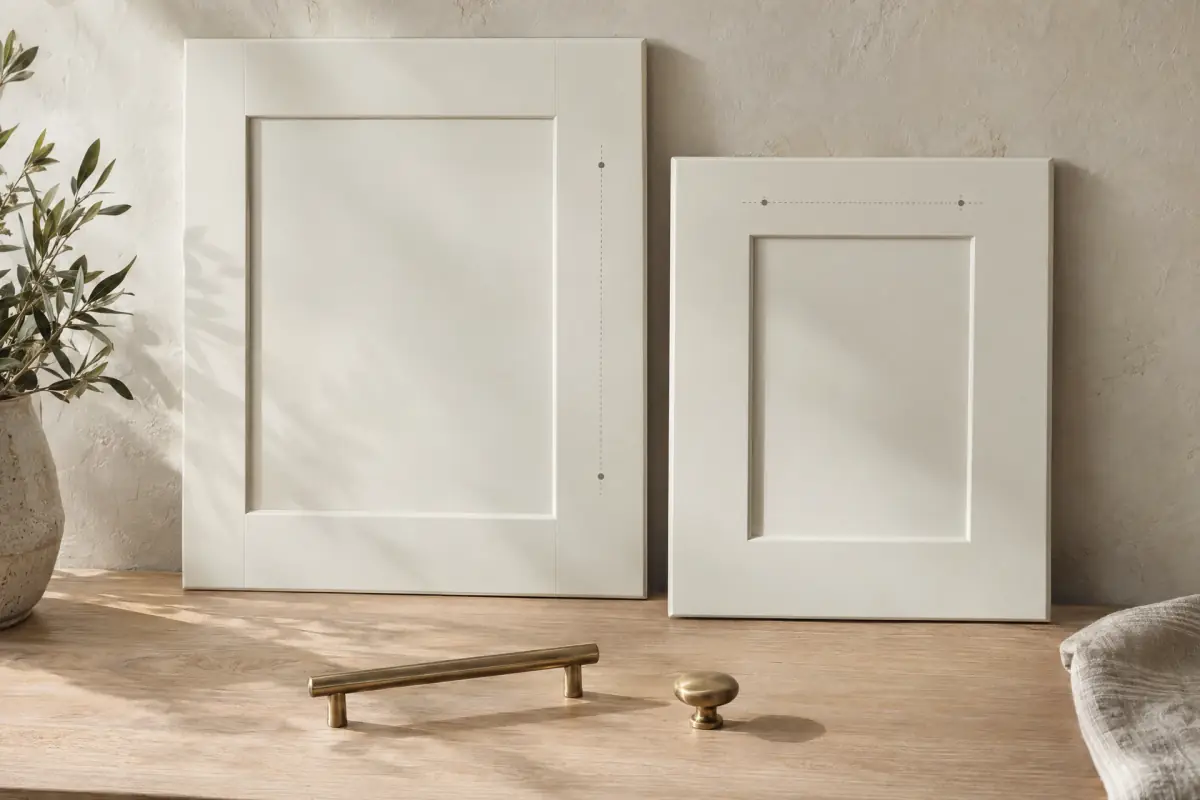
Hardware placement rules that look right
Knob or pull, and where exactly to put it. The placement rules that make a cabinet run look intentional, plus the mistakes that show up after drilling.