Painted vs stained cabinets in a busy kitchen
Paint hides grain and forgives touch-ups; stain shows wood and punishes chips. How each finish survives grease, steam, kids and sunlight in a busy kitchen.

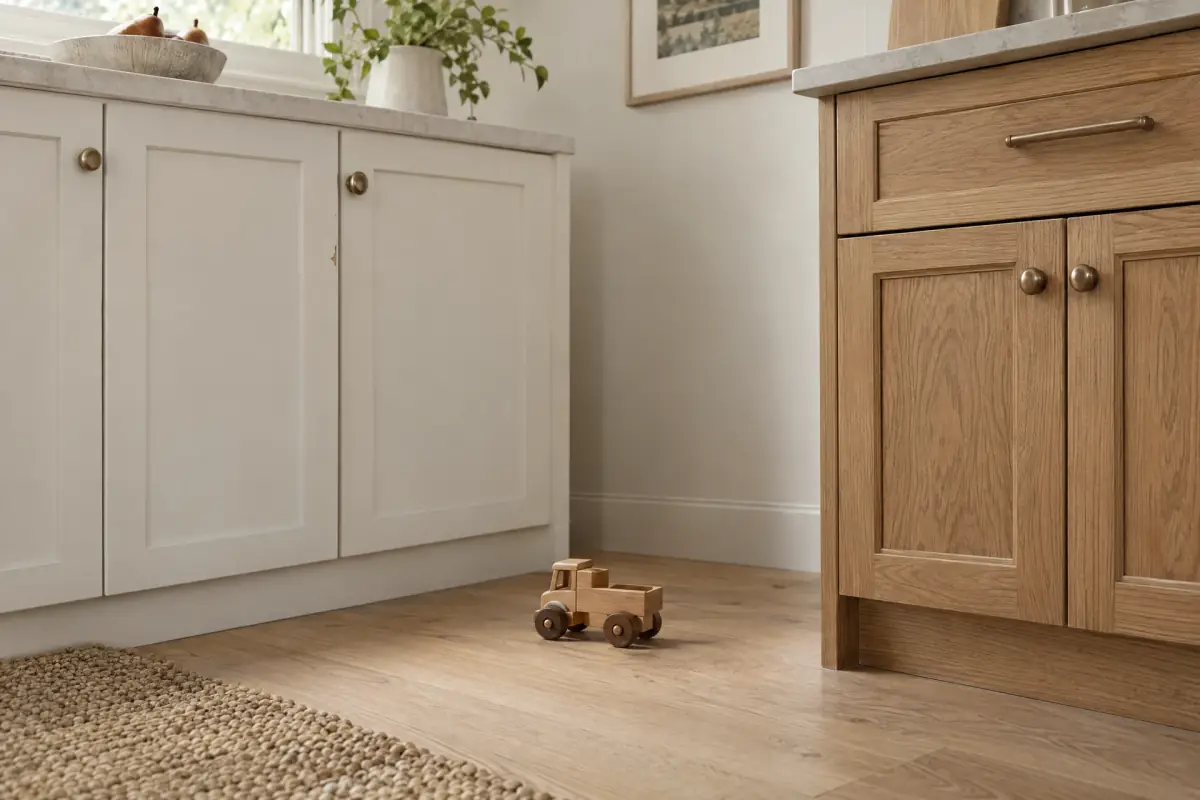
Paint and stain are not two colours on the same product. They are two different ways of protecting a door, and they fail in different places. In a kitchen that gets used hard — pasta water, school bags, a stool dragged along the base run — that difference matters more than the shade you picked from a fan deck.
Here is how each one behaves after a few years of real cooking, and how to choose without repainting the whole kitchen in 2031.
What paint actually does
Paint sits on the surface as a film. It covers the grain, fills small imperfections and gives you a uniform colour across every door, which is why painted kitchens photograph so calmly. A factory-applied paint or lacquer is baked or cured hard, and a good one resists grease and wiping.
The trade-off is that a film can be damaged. A chip at an edge exposes whatever is underneath, and on a painted MDF door that means a pale, absorbent core that will swell if water gets in. The saving grace is repairability: a small chip can be filled and touched in, and a whole door can be repainted later without stripping anything.
Paint also hides the thing stain is designed to show. If your doors have a modest veneer or a repaired joint, paint is the more forgiving choice.
What stain actually does
Stain soaks into the wood rather than sitting on top of it. The grain stays visible, the surface feels like timber rather than film, and a knock usually dents the wood instead of chipping a coating. On oak, ash or walnut, that grain is the whole point.
The trade-off runs the other way. A stained surface is much harder to spot-repair, because any repair has to match both the colour and the grain. Wear shows first where hands land: around knobs, along drawer pulls, at the top edge of a base door where a hip brushes past. Sunlight also shifts some woods and finishes over time, so a door that spends years in direct light can end up a different tone from the one in the shade.
Stain is also less forgiving of cheap materials. A stained veneer with a paper-thin face will sand through at the edges, and a stained MDF door will never look like wood because there is no grain to show.
The busy-kitchen test
Think about the four things a kitchen actually throws at a finish.
Hands and grease. Painted surfaces wipe clean easily, but grease collects in shaker recesses and along frame joints regardless of finish. Stained wood is slightly more forgiving of a missed wipe because the grain hides smudges, but it also absorbs oil if the topcoat has worn through.
Steam and water. Steam is the enemy of any film finish at an unprotected edge. Painted MDF doors near a hob or sink need sealed edges and a good extractor. Stained solid wood handles damp better in the short term but can still cup if water sits on it.
Impacts. A painted door chips; a stained door dents. A chip is more visible on a dark colour, a dent is more visible on a glossy finish. Matte paint and matte stain both hide everyday wear better than gloss.
Sunlight. Strong light fades and shifts both, but a stained wood changes tone more visibly because the grain carries the colour. If one side of the kitchen faces a big window, expect that run to age differently.
The five-year question. Ask yourself what you want to be doing in five years: touching in a few chips with a small brush, or living with worn patches around the handles until you can re-stain the whole run. Neither answer is wrong, but only one of them is a weekend.
Where each finish belongs
Painted cabinets suit busy family kitchens, small rooms that need light, and any layout where you want the cabinetry to recede so the worktop or the view does the talking. They also suit a house that will be repainted once or twice in the next decade, because a repaint is a realistic DIY job on a flat or shaker door.
Stained cabinets suit rooms with real timber elsewhere — floors, beams, a staircase — and owners who like the idea of a surface that patinas. They are a poor fit for a hard-used utility kitchen, a rental, or anywhere the doors will take repeated knocks without anyone reaching for a repair kit.
The cost question, honestly
Finish costs move more with method than with colour. A factory-applied finish is consistent and durable; a site-applied finish depends entirely on preparation and drying conditions, and it is the part of a quote most likely to be vague. Ask for the finish to be listed separately, per door front, and ask what happens if a door arrives damaged. Any quote that bundles “paint or stain” into one line is hiding the decision you are trying to make.
The bigger cost lever is still the door itself. A well-made painted MDF door usually costs less than a solid oak door with a hand-stained finish, because you are paying for the material and the labour, not the colour.
A simple decision table
| If this sounds like your kitchen | Choose | Because |
|---|---|---|
| Two adults, two kids, a hob that runs every night | Paint, matte, factory-applied | Chips touch in; grease wipes off a film more easily |
| Period house with original floors and beams | Stain on solid wood or a thick veneer | Grain belongs with the architecture |
| Small room that needs to feel bigger | Paint in a warm white | Light bounces; the run recedes |
| You want to repaint in five years without a fitter | Paint on a flat or shaker profile | A repaint is a realistic weekend job |
| Utility or rental where doors get knocked | Paint, mid-sheen, sealed edges | Dents and chips are easier to make good |
| You love watching wood age | Stain, matte, with a repairable topcoat | Patina is the point, not a defect |
What to check before you order
Ask to see a finished sample, not a colour chip. Take it home, put it next to your worktop and your floor, and look at it in the morning light and again at night with the kitchen lights on.
Then ask three practical questions: how are the edges sealed, what topcoat is used, and can I buy a touch-up kit in the same batch. A maker who can answer all three is a maker who expects the finish to be lived on.
If your layout is sound and only the fronts are tired, a refaced kitchen lets you change from paint to stain — or the other way round — without touching the boxes. If the boxes are the problem, the finish is the least of your decisions. Our materials guide explains what sits under the paint, and the door styles hub shows how each profile changes the way a finish reads.
For a run that has to match joinery already in the house, or an opening that is out of square, custom cabinet doors made to your measurements are usually the cheaper route than rebuilding the boxes to suit a stock size.
Keep reading
All guides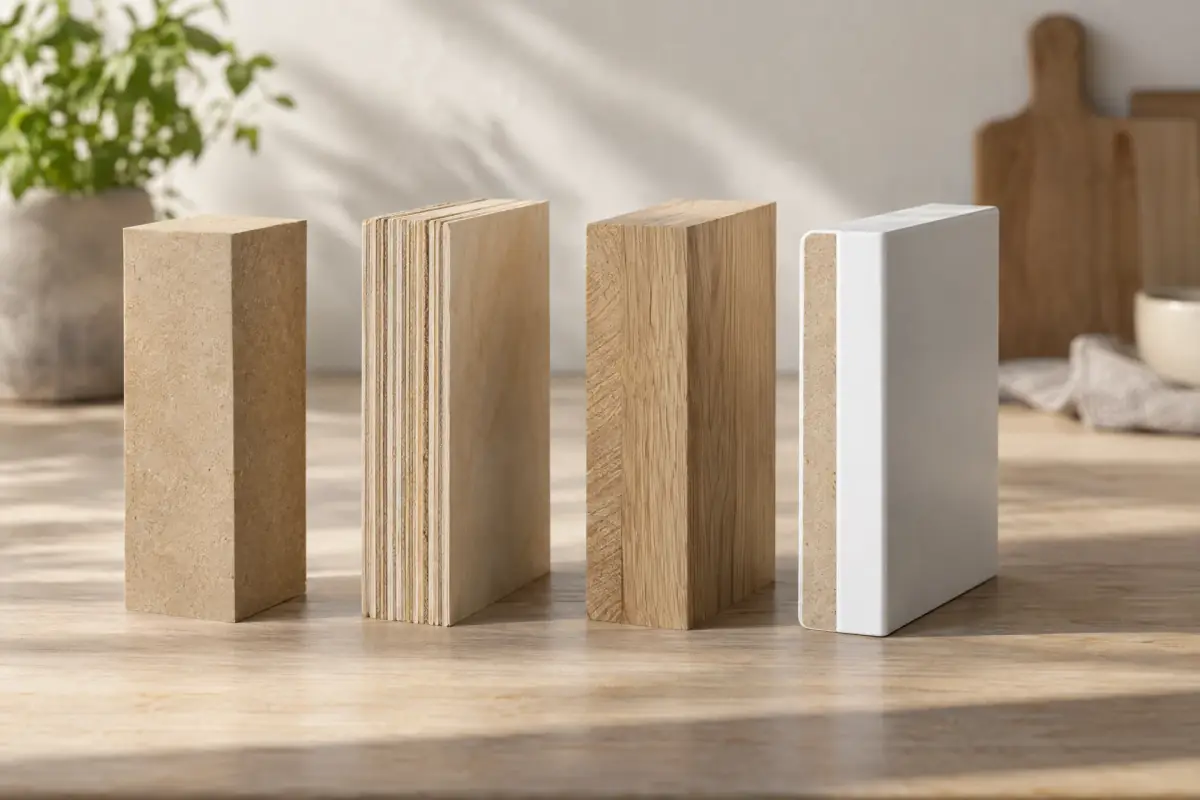
MDF vs plywood vs solid wood cabinet doors
MDF, plywood and solid wood behave differently in a cabinet door. How each core handles moisture, hinges and paint, and which rooms suit each.